When the Space Program is Your Partner
A 1985 report on how NASA's Technology Transfer program enabled entrepreneurs like Larry Grossman to turn black hole exploration tech into medical innovation.
NASA Technology Transfer
Part 3 of 5
Table of Contents
By Edmund L. Andrews for the New York Times March 1985
NASA Makes Its Technology Available to Entrepreneurs
A heart pacemaker that lasts 100 years. A headband that keeps you cool while playing tennis. A low-radiation X-ray technique developed while exploring black holes. These inventions came from technology that cost little or nothing upfront. The source? The National Aeronautics & Space Administration (NASA).
The Space Act of 1958 created NASA and, among other things, mandated it to encourage businesses to develop inventions originated by the space program. Since the 1960’s, the agency has issue 776 non-exclusive and 77 exclusive licenses for a variety of enterprises, ranging from unintended ideas to projects at multinational conglomerates. In 1984, NASA spent part of its $9 million budget to provide information on inventions. It employs technology transfer experts at seven major industrial application centers and in 1984 granted $3 million to companies developing commercial applications for its technology.
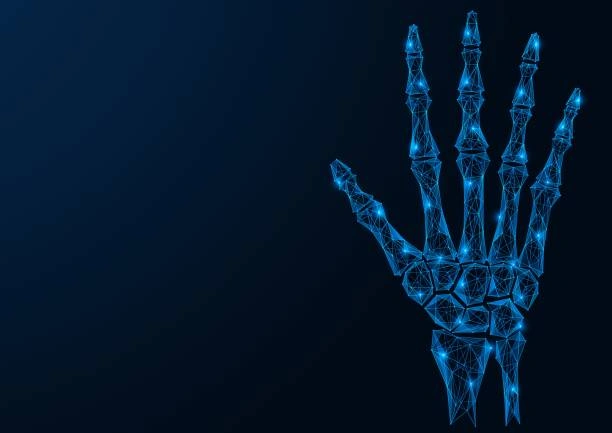
In March 1984, Larry Grossman, 35, and Kenneth L. Wieselman, 36, acquired technology they hope will lead to at least $10 million in 1985 sales for HealthMate Inc., Northbrook IL. NASA developed the Lixiscope (low intensity X-ray imaging) to observe black holes in space. The device allows physicians to scan a patient as if through a video camera rather than through snapshots and without heavy radiation. The technology is also said to be more accurate and compact. HeathMate expects to retail its Fluoroscan for $20,000, compared with $250,000 for a standard fluoroscope. The FDA has yet to okay the product, but other, less portable, devices have been approved already.
Grossman marketed an earlier generation of the Lixiscope for another company, spending $3,000 upfront and an additional 3.5% annual royalty to license both the X-ray tube Lixiscope and a miniaturized power supply system also patented by NASA. They say their portable device can examine everything from injuries on a football field to industrial equipment in factories.
HealthMate invested $1 million from a Chicago bank and $500,000 in personal capital. The partners hope to raise $3.5 million in a public offering to finance manufacturing.
Those who adapt NASA technology said that the effort is worthwhile. “People who recognize what NASA can contribute do well. Those who don’t just go on to reinvent the wheel.”